Hotel Trópico Latino
 May 11, 2026
 Hotel Trópico Latino
 Every year the same pattern plays out: travelers plan around dry season, pay peak prices, share the beach with more people than expected, and go home. Then they hear from someone who went in October and had a completely different experience.
Costa Rica’s low season — roughly May through November — gets a bad reputation it doesn’t fully deserve. “Rainy” puts people off. But if you’ve actually spent time in the country during this period, you know the reality is more nuanced than that. This is especially true in Santa Teresa, where low season has a distinct quality that a lot of travelers prefer once they experience it.
The term rainy season is technically accurate but practically misleading. It implies constant rain, grey skies, and ruined plans. That’s not what happens in Santa Teresa — or most of Costa Rica’s Pacific coast.
Mornings are typically clear — sunny, warm, with sharp light. You can surf, swim, hike, and explore without interference from rain. The afternoon is when things change. Clouds build, and sometime between 2 PM and 6 PM, rain arrives. Usually heavy for an hour or two, then it passes. Evenings are often clear.
What you get is a natural rhythm: active in the morning, a built-in break in the afternoon, a calm evening on the beach or at dinner. For a lot of travelers, that pace is exactly what they came for.
The landscape also transforms. The dry season strips color from the hills around Santa Teresa — vegetation turns brown and dusty. When the rain comes, everything goes green within days. The hills fill out, the air feels cleaner, and the place looks more like what people imagine when they think of Costa Rica.

Hotel rates in Santa Teresa during green season can be 20–40% lower than peak season. Flights to San José (SJO) and Liberia (LIR) are also generally cheaper, since demand drops.
For travelers on a budget, low season isn’t a compromise — it’s a smarter way to see the same destination. The beach doesn’t go anywhere. The surf doesn’t stop. The food at Shambala Restaurant is the same. You’re paying less with fewer people around.
For travelers who normally spend more, low season is an opportunity to get more for the same budget — a better room, a longer stay, or extras that would have been out of reach in December.
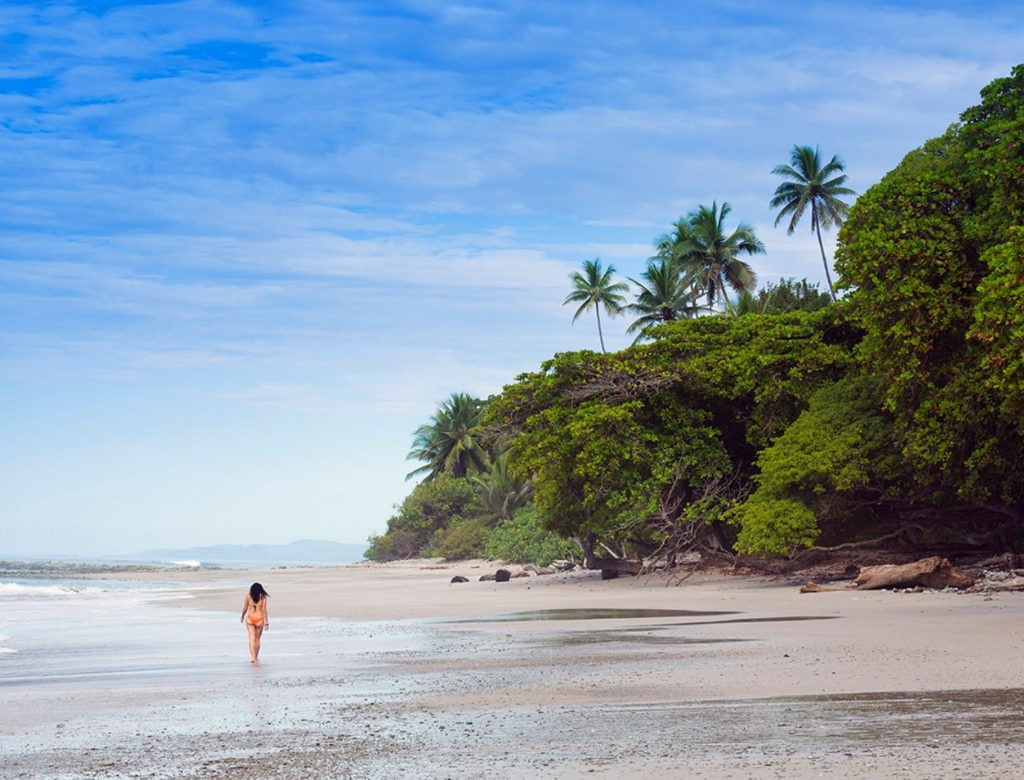
Family enjoying a quiet beach moment in Santa Teresa during low season.
Santa Teresa in high season is busier than it used to be. December through March brings a consistent influx from North America and Europe. Popular surf breaks get crowded, restaurant tables fill by 7 PM, and accommodation books out weeks in advance.
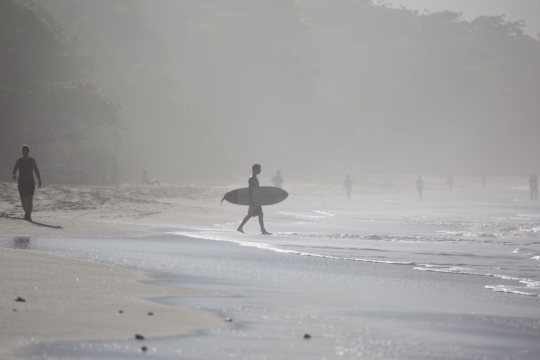
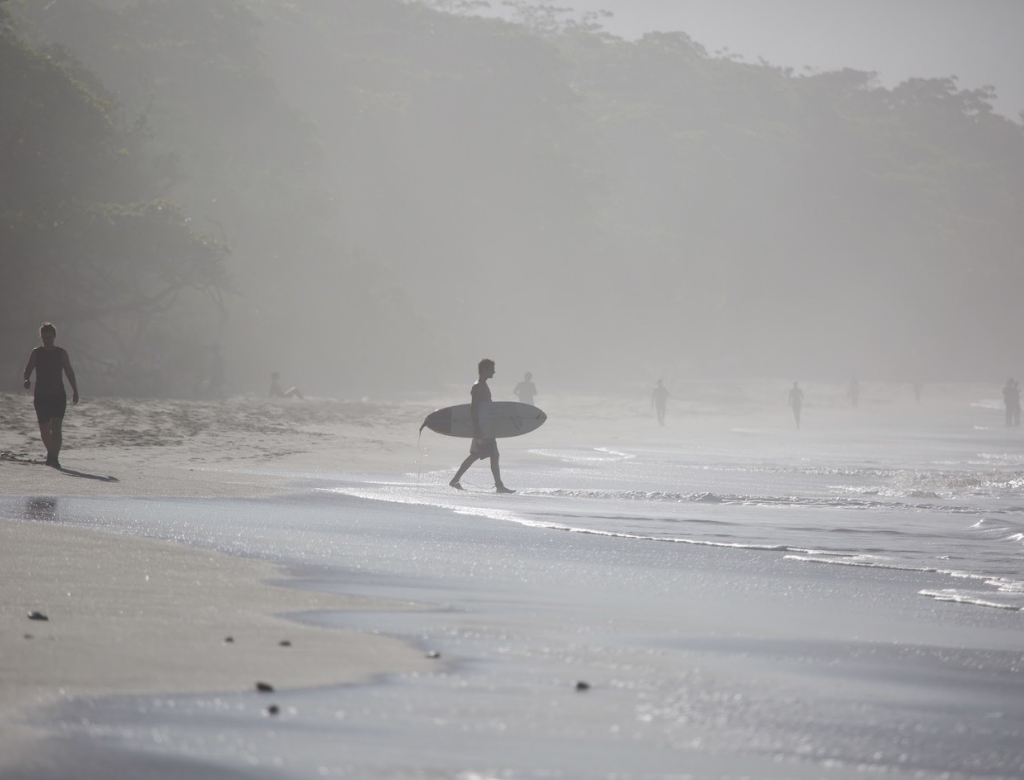
In green season, the pace is different. The beach has more space. The surf lineup at Playa Carmen has fewer people, which means more waves. Restaurants are unhurried. The town feels like itself rather than like it’s operating at capacity.
Santa Teresa in high season is busier than it used to be. December through March brings a consistent influx from North America and Europe. Popular surf breaks get crowded, restaurant tables fill by 7 PM, and accommodation books out weeks in advance.
In green season, the pace is different. The beach has more space. The surf lineup at Playa Carmen has fewer people, which means more waves. Restaurants are unhurried. The town feels like itself rather than like it’s operating at capacity.
If you know how to surf and want quality waves over beginner-friendly conditions, green season is often the better time. From May through November, the Pacific receives stronger swell from the south and southwest. Breaks around Santa Teresa — particularly Playa Hermosa and Mal País — get more powerful and defined.
Morning conditions during green season can be among the best of the year: glassy, solid, well-formed waves with fewer surfers in the water. By the time afternoon rain arrives, most people have already come in.
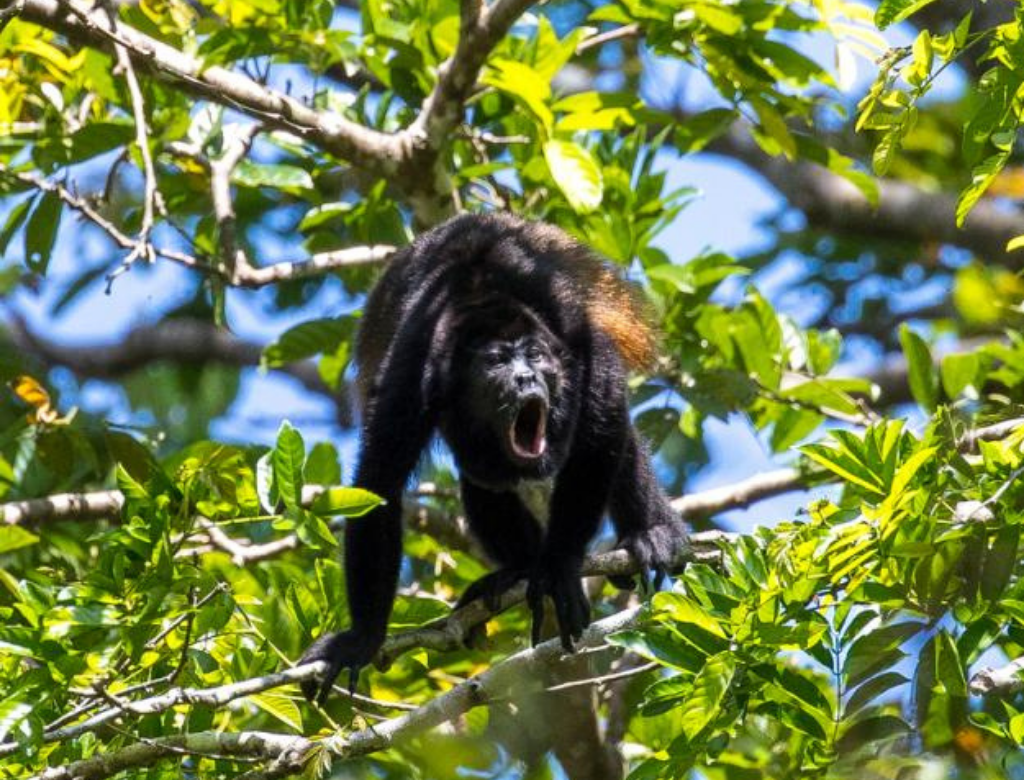
Howler monkey in the trees near Santa Teresa during Costa Rica’s green season.
The transition into rainy season coincides with increased wildlife activity throughout the Nicoya Peninsula. A few things worth knowing:
Sea turtle nesting: Olive ridley sea turtles nest on select beaches in the region, with activity peaking roughly between July and December. Nesting is not guaranteed at any specific location, but the Nicoya Peninsula does see regular activity during this window. It’s worth asking locally about current conditions if this is something you’re hoping to see.
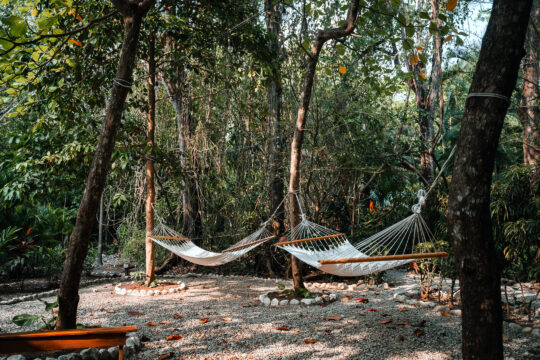
Howler monkeys and birds: The returning vegetation brings more food sources for wildlife, and animal sightings around the forest edges near Santa Teresa tend to increase. The property at Hotel Trópico Latino borders trees where howler monkeys pass through regularly in the early morning.
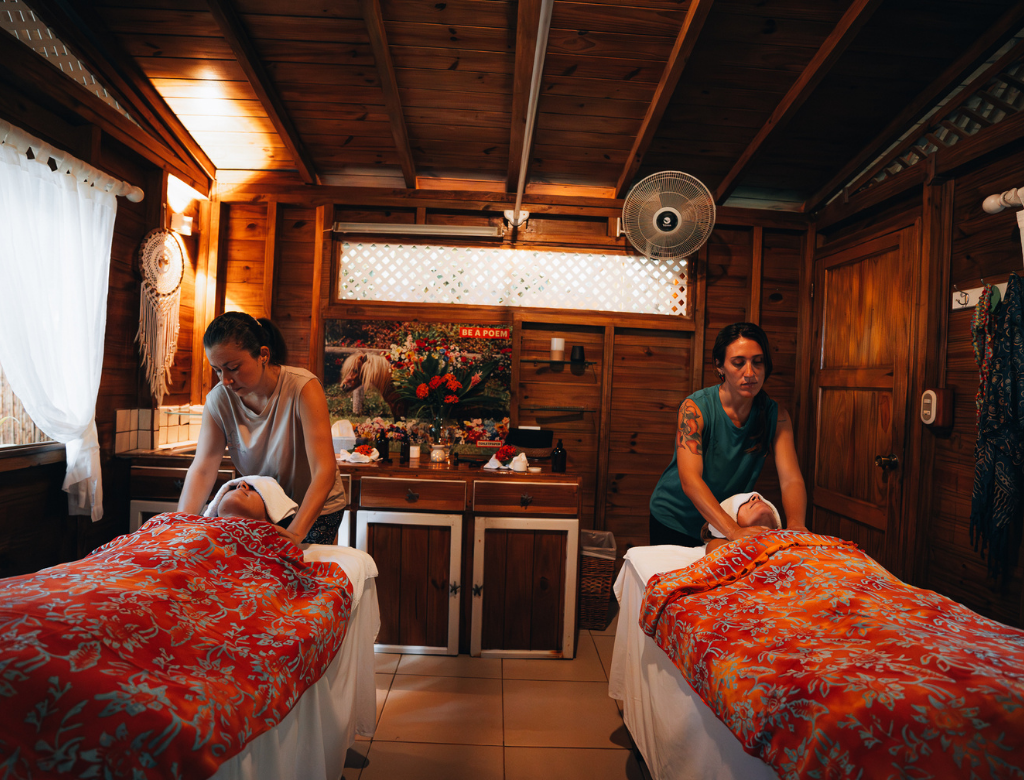
Massage and wellness experience at Hotel Trópico Latino on a rainy afternoon.
A practical question worth answering honestly: what happens on an afternoon when the rain is heavy and you can’t be outside?
The answer is that most of the same activities still apply — just indoors or later in the day. A few things that work well:
Eat a long lunch. Shambala Restaurant at Hotel Trópico Latino is covered and faces the beach. Watching a rain shower come in from the Pacific while having lunch is actually a pretty good use of an afternoon.
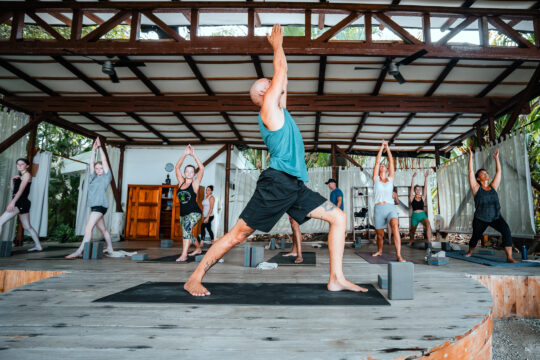
Yoga or bodywork. The on-site yoga studio at the hotel is a natural fit for rainy afternoons. Book a massage, take a class, or use the time for something slower.
Explore covered spaces in town. Santa Teresa has cafés, a few small shops, and spots to sit and spend an hour or two without getting wet.
Travelers who come with this understanding have a better time than those expecting dry-season weather who are disappointed when clouds show up at 3 PM.
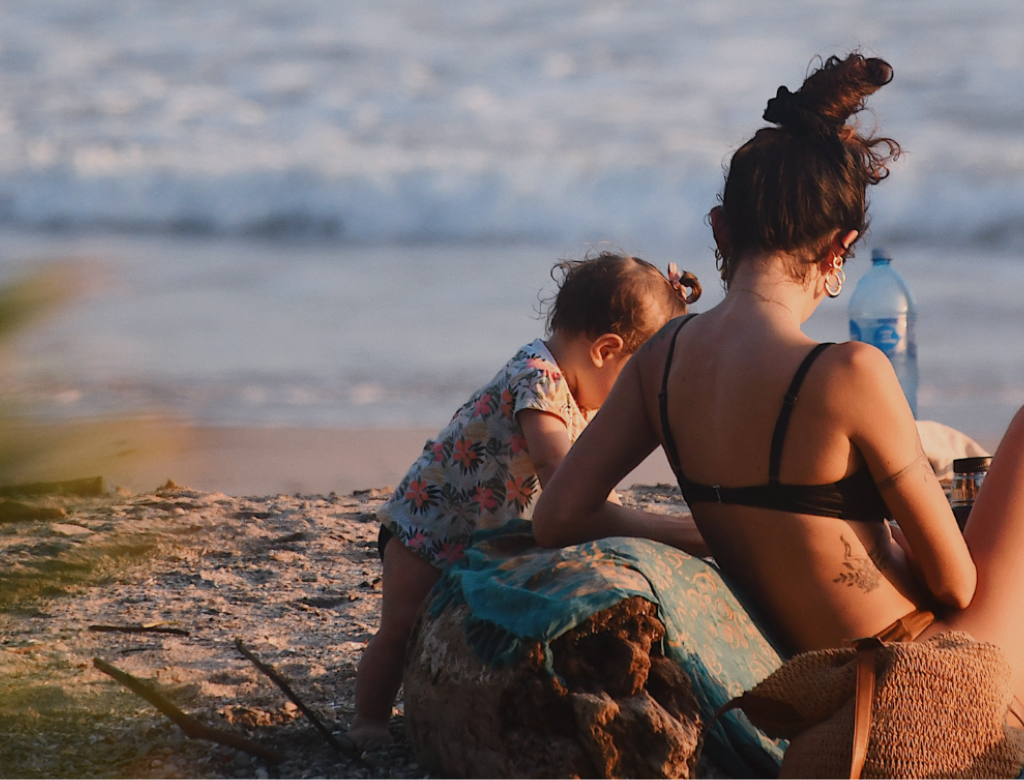
Traveler relaxing on a quiet Santa Teresa beach during Costa Rica’s low season.
May: Transition into rainy season. Swell begins to increase. Prices drop. A good shoulder-season option.
June–July: Reliable morning conditions, afternoon rain. Strong swell. Fewer crowds. This is when a lot of repeat visitors prefer to come.
August: Similar to June/July. Peak of the rainy season in terms of afternoon intensity. Still very surfable and enjoyable.
September–October: The rainiest months on average. Swell is biggest. For beach-focused travelers, this requires the most flexibility. For serious surfers, often the best waves of the year.
November: Transition back toward dry season. Crowds start to return slightly. Still good value and quality conditions.
Green season in Santa Teresa isn’t for everyone. If you need guaranteed sun all day every day, dry season is the better fit. But if you’re open to a different pace — clear active mornings, a natural afternoon break, lower prices, and a place that feels less like a tourist destination — green season is worth serious consideration.
The surf doesn’t stop. The food is the same. The beach is still there, and for many travelers, it’s better for it. Hotel Trópico Latino is open year-round, and the team can give you a realistic picture of what to expect based on the specific months you’re considering.
Yes. The rain is a daily weather pattern, not a safety issue. Roads can get muddy or flooded during heavy downpours on certain routes, so a 4×4 vehicle is useful during the rainiest months. Ask locally about road conditions if you’re planning travel outside the main route.
Rarely for the whole day. Morning activities almost never get rained out. The main risk is afternoon excursions that can’t be rescheduled. Build your itinerary around morning activity and you’ll rarely have a problem.
Most established businesses stay open year-round. Some smaller or seasonal spots may close for part of the rainy season, usually in September or October. It’s worth confirming in advance if there’s something specific you’re planning around.
Often very good, especially for intermediate and advanced surfers. Swell size and frequency increases from May onward. Beginners can still take lessons — conditions are manageable in the morning at Playa Carmen.
Hotel rates typically drop 20–40% compared to high season. Flight prices also tend to be lower. The exact savings depend on how far in advance you book and what type of accommodation you’re looking at.
Yes — and in some ways more so. Sea turtle nesting season, increased bird activity, and more visible wildlife in the surrounding vegetation all peak during the green season months.
Is low season good for families?
It can be, especially in the earlier part of the season (May–July) when rain is less intense. The quieter beaches and lower prices work well for families. September and October are the rainiest months and may require more planning around weather.
Hotel Trópico Latino is open year-round. For availability, rates, and trip planning: