Hotel Trópico Latino
 May 12, 2026
 Hotel Trópico Latino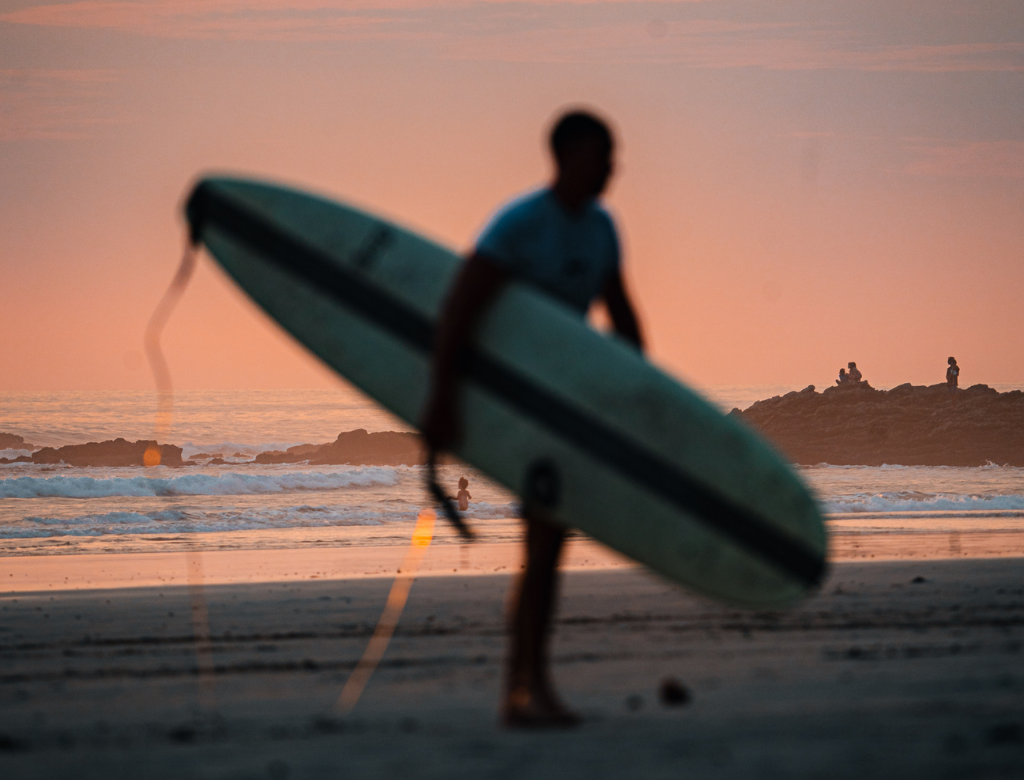
Surfer walking on the beach at sunset in Santa Teresa, Costa Rica
Santa Teresa is not a hidden gem anymore — the surfing community found it years ago and word spread. But it still delivers. Consistent waves, warm water, multiple breaks for different skill levels, and a beach town that hasn’t lost its character entirely to tourism. If you’re deciding where to surf in Costa Rica, Santa Teresa belongs near the top of the list.
Costa Rica has surf on both coasts. The Caribbean side has a short, defined surf season. The Pacific side — where Santa Teresa sits on the Nicoya Peninsula— works year-round.
The Nicoya Peninsula gets consistent swell from the south and northwest, depending on the time of year. The combination of beach breaks, reef breaks, and point breaks in the Santa Teresa area means there’s almost always something rideable, regardless of your skill level.
The water temperature sits between 27–29°C (80–84°F) year-round. You don’t need a wetsuit. A rash guard is enough for sun protection.
The town itself is organized around surfing in a way that makes it easy: surf shops, board rentals, schools, and repair services are all within easy reach of the main beach.
Playa Carmen
The central beach and most accessible for most surfers. It’s a beach break — waves break over sand, not reef — which makes it more forgiving for beginners while still consistent for intermediate surfers.
Conditions in the morning are generally cleaner. Wind is lighter, wave faces are smoother. By afternoon, onshore winds can make it choppier. The beach is long, peaks spread out, and it doesn’t feel overcrowded even with a lot of surfers in the water. The section directly in front of Hotel Trópico Latino is one of the most active for lessons and general surfing.
Playa Hermosa
Just south of Carmen, Hermosa picks up more swell and handles bigger conditions better. Better suited for intermediate to advanced surfers. On bigger swell days, this is where more experienced riders tend to go.
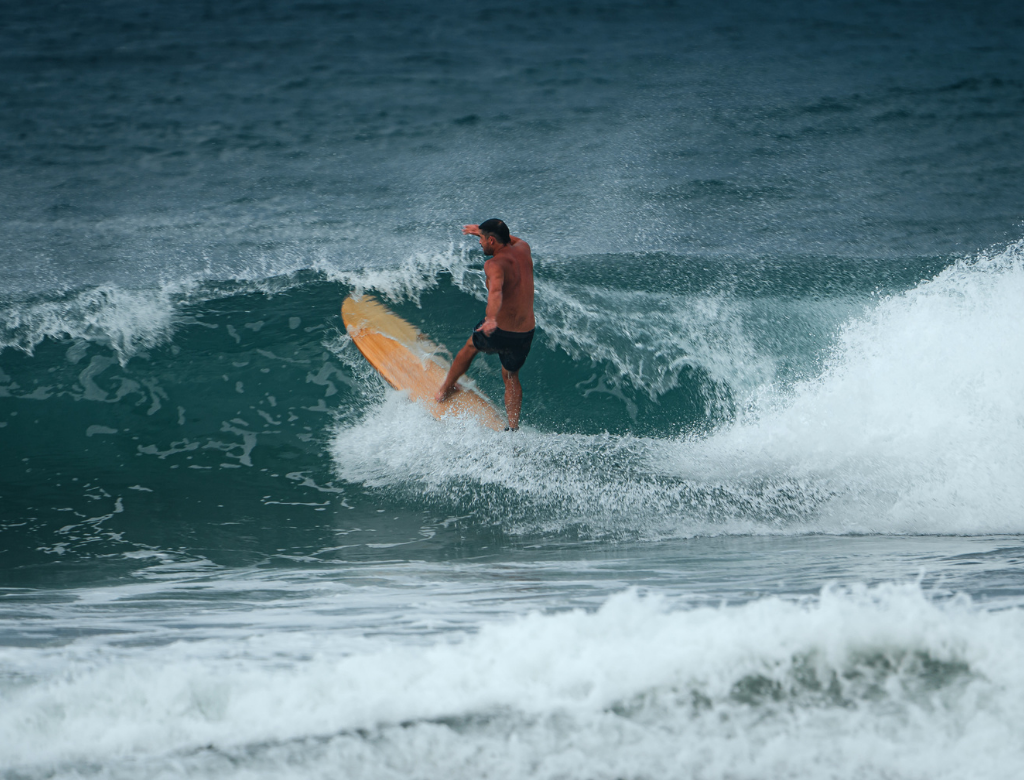
Surfer riding a wave at Playa Hermosa in Santa Teresa, Costa Rica
Mal País
A few kilometers south, Mal País has reef and point breaks that work for experienced surfers. Waves here are more powerful and less forgiving. Beginners should stick to Carmen.
Dry Season: December to April
Clear skies, offshore winds in the morning, and consistent swell from the northwest. Morning conditions are often glassy — smooth water surface, well-defined wave faces. This is also the busiest and most expensive time of year.
Best for: beginners and intermediate surfers who want reliable, clean conditions.
Green Season: May to November
Bigger, more powerful swell from the south and southwest. Wave quality can be excellent, and crowds thin out significantly. Rain typically falls in the afternoon — mornings are usually clear and often produce the best conditions of the year. Accommodation prices drop and the lineups have more space.
Rain typically falls in the afternoon or evening, not all day. Mornings are often clear. Surfing conditions in the morning during green season can be some of the best of the year.
The landscape is also dramatically greener — the dry season strips a lot of color from the hills, and the rain brings it back.
Best for: intermediate and advanced surfers looking for more powerful waves and fewer crowds.
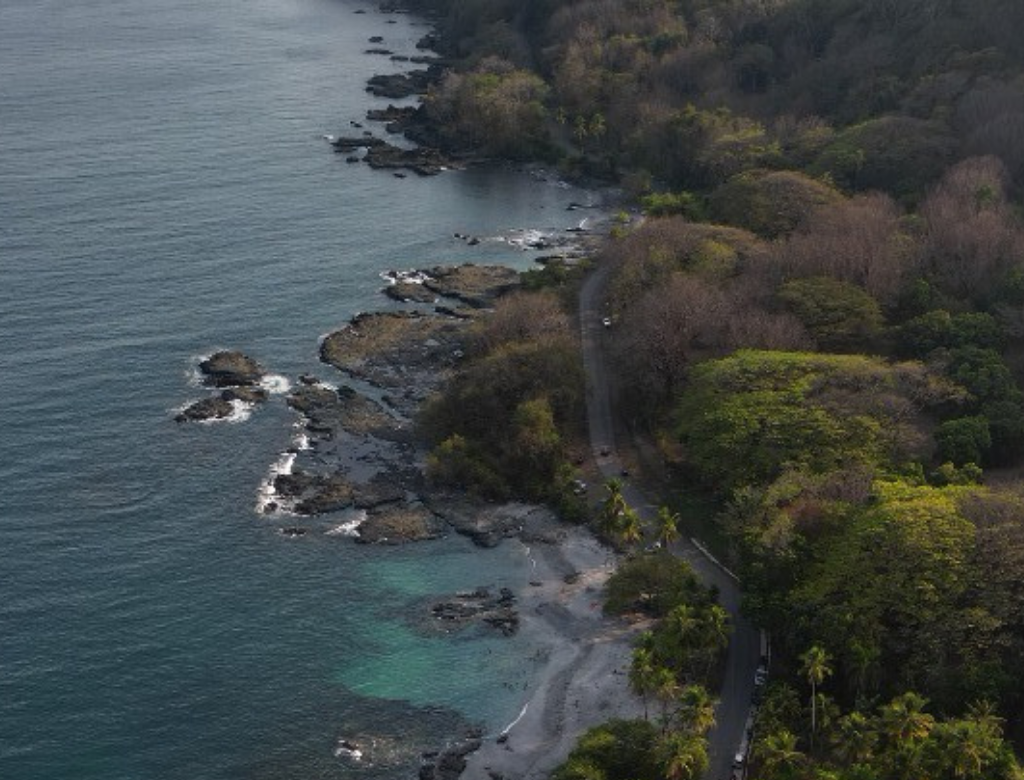
Aerial coastline view of Santa Teresa during Costa Rica’s green season
The beach break at Playa Carmen is one of the better places in Costa Rica to take your first lesson. Waves have enough push to get a beginner moving but don’t tend to close out sharply. For guests at Hotel Trópico Latino, lessons happen steps from the front door.
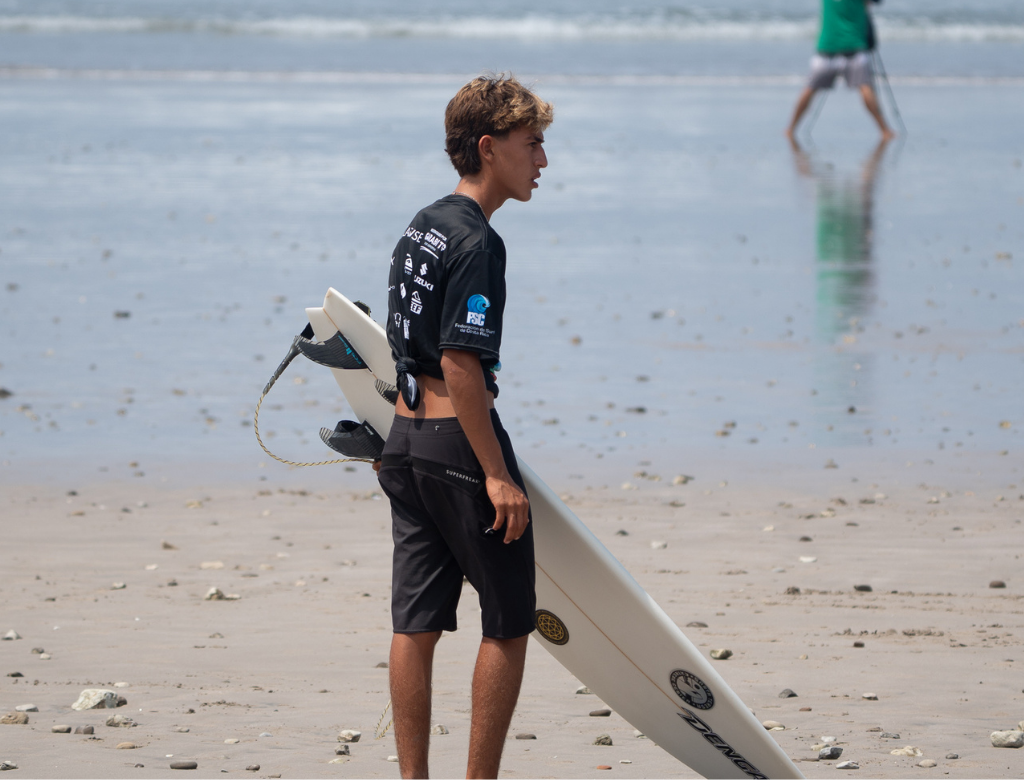
Beginner surfer with a surfboard at Playa Carmen in Santa Teresa, Costa Rica
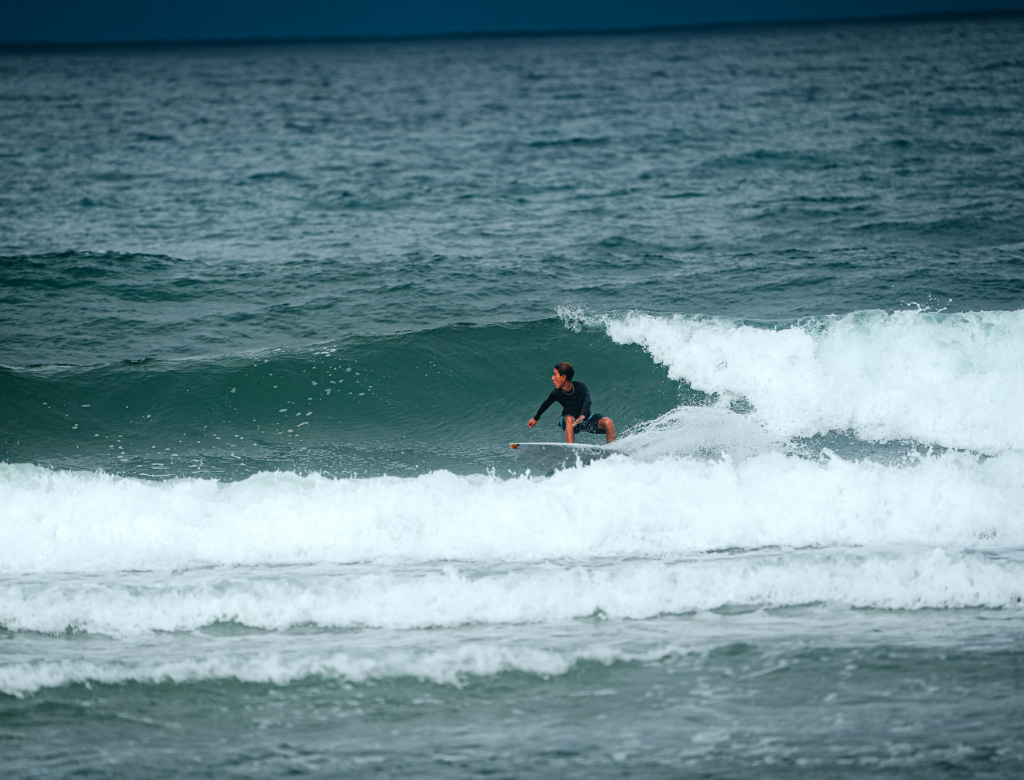
Surfer riding waves in Santa Teresa, Costa Rica
Most international flights land in San José (SJO) or Liberia (LIR).
From San José: The most popular route is to drive or take a shuttle to the ferry terminal at Puntarenas, cross to Paquera by ferry (roughly 1.5 hours on the water), and then drive or take a shuttle to Santa Teresa (another 1.5–2 hours). Total travel time from San José is typically 4–5 hours depending on connections.
From Liberia: Drive south through the Nicoya Peninsula, which can take 3–4 hours depending on road conditions. No ferry required on this route.
Domestic flight: Sansa Airlines operates flights from San José to Tambor, a small airport about 30 minutes from Santa Teresa. Quick and convenient but limited schedule and additional cost.
Road conditions: The road into Santa Teresa is paved for most of the route but has sections with potholes and unpaved stretches depending on recent maintenance. A standard vehicle can make it in dry season. During heavy rain in green season, a 4×4 is useful for more remote routes.
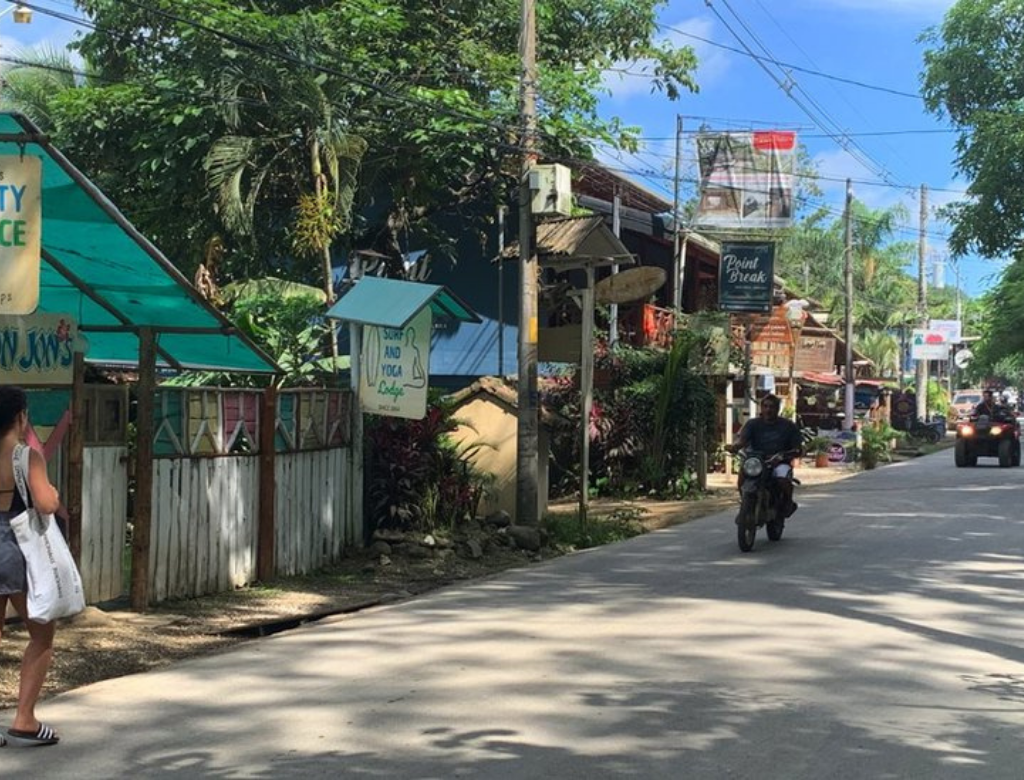
Hotel Trópico Latino is located directly on Playa Carmen — walk out the door and you’re on the beach. Surf lessons and board rentals can be arranged through the hotel.